Scallops
Fresh off the boats, pure, with no chemicals or preservatives — that was always the scallop standard here, and the taste is outstanding. Large North Atlantic sea scallops are one of the great five-minute luxuries of the kitchen, provided you start with the right scallop and a properly hot pan.
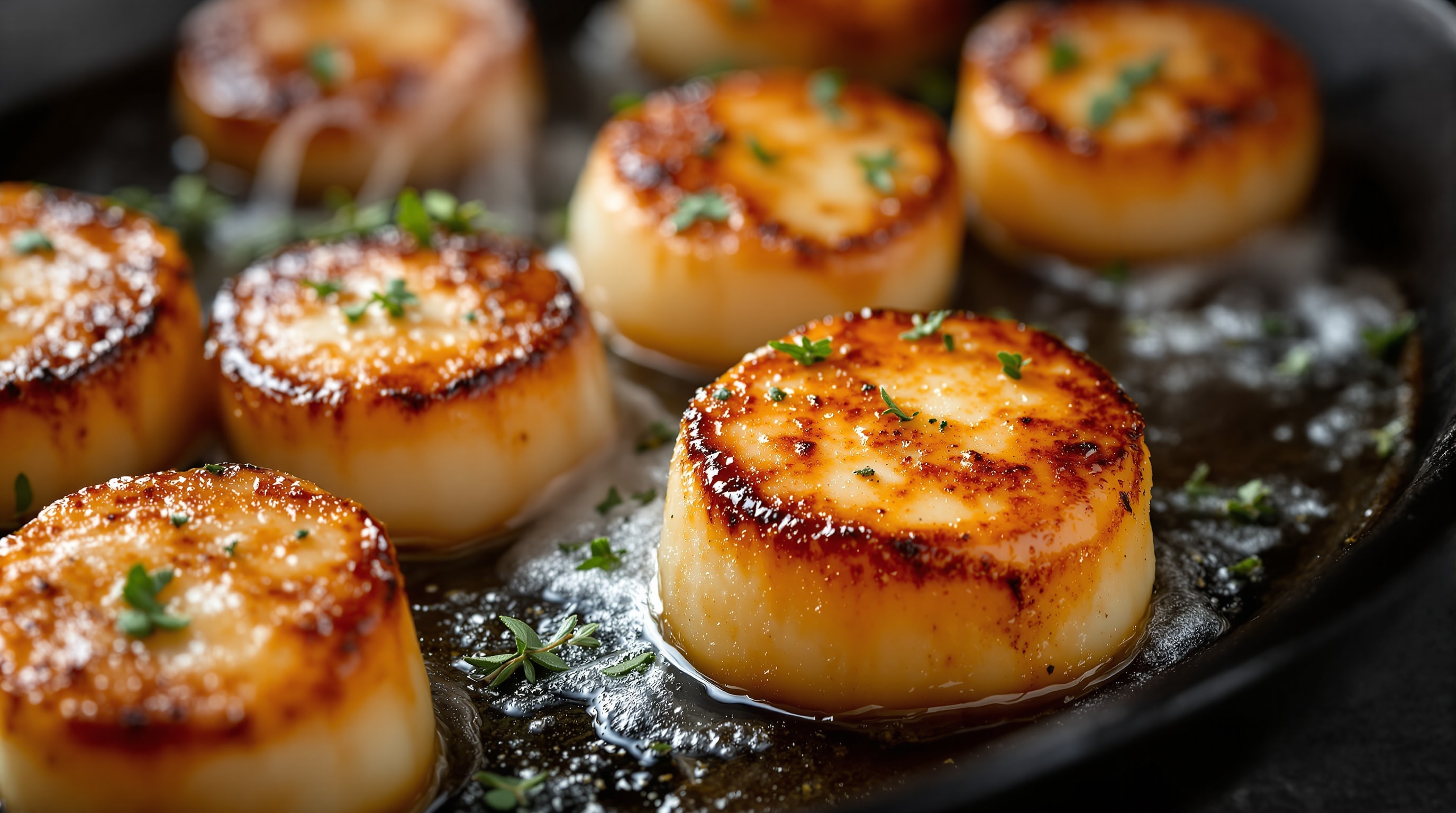
What "10/20 Count" Means
Scallops are sized by count per pound. A 10/20 scallop runs ten to twenty pieces to the pound — large, plump sea scallops the size of a wine cork, ideal for searing. Smaller bay scallops (60-plus per pound) are sweeter still but cook in seconds and belong in stews, pastas and ceviche rather than the sauté pan.
Dry vs. Wet: The Only Question That Matters
Dry scallops are untreated — nothing but scallop. Wet scallops have been soaked in a phosphate solution that whitens them and adds water weight; they weep in the pan, refuse to brown, and carry a faint chemical tang. Dry scallops look ivory to pale coral rather than stark white, and they smell sweetly of the sea. The North Atlantic fishery that produces them is a sustainability success story, documented by NOAA Fisheries — the U.S. sea scallop fleet is among the most valuable and best-managed in the world.
The Perfect Sear, Every Time
Pat the scallops aggressively dry and pull the little side muscle off each one. Get a heavy pan just short of smoking with a high-heat oil, salt the scallops at the last second, and lay them in with room to breathe. Ninety seconds untouched builds the deep golden crust; flip, add a knob of butter, baste for sixty seconds more, and out. The center should stay barely translucent — a scallop is a muscle of pure sweetness, and heat is its only enemy.
What a Scallop Actually Is
The medallion on your plate is the adductor muscle — the engine a scallop uses to clap its shells and, uniquely among bivalves, swim. That working muscle is why scallops have the dense, meaty texture clams and oysters lack, and why they sear like a fine steak. Sea scallops are harvested year-round from Atlantic waters from the mid-Atlantic to the Canadian border, dredged or — for the premium "diver" grade — gathered by hand. Day-boat scallops, landed within a day of capture and never treated, are the ones worth planning a dinner around.
Shells, Meats and Landing Figures
According to NOAA's Atlantic sea scallop profile, 2024 commercial landings totaled 21.2 million pounds of scallop meats, valued at $332 million. That weight is meats, not whole shells. The minimum shell height for in-shell scallops at landing is 3.5 inches, measured from the hinge to the farthest shell edge; it is a different measurement from the count per pound on a kitchen pack.
In NOAA's 2023 fisheries report, sea scallops were the main driver of New Bedford's first-place ranking by catch value for the 23rd consecutive year. Maine's separate 2025 figures placed scallops fifth among its commercially harvested species, at $9,344,477. Keep the year, place and unit attached to each figure: a port's catch value and a state's species total answer different questions.
Storage and Handling
Fresh scallops are best the day you buy them and acceptable the day after, kept in the coldest part of the refrigerator in a sealed container over ice. They freeze better than most shellfish — spread on a tray until firm, then bagged — and thaw overnight in the refrigerator, never at room temperature. Pat dry, always; a wet scallop steams, a dry one sears.
What to Serve Alongside
A seared scallop is a blank, sweet canvas, and the plate around it should stay quiet. Acid is the classic counterweight — a squeeze of lemon, a brown-butter pan sauce finished with capers, or a spoon of citrus beurre blanc lifts the natural sugars without burying them. For starch, keep it soft and mild: a pea or corn purée, silky polenta, or simply good bread to catch the butter. Bright, slightly bitter greens — frisée, watercress, charred asparagus — cut the richness and keep an appetizer from feeling heavy. Wine wants to stay crisp and unoaked, a Muscadet or a dry Riesling, so the scallop stays the sweetest thing on the table. Restraint, once again, reads as confidence.
Beyond the Sear
Bacon-wrapped scallops are the cocktail-hour classic: half a slice of thin bacon per scallop, a pick to hold it, and a hot oven until the bacon crisps. Smoked scallops — once a quiet favorite of this house — turn silky and intense, beautiful tossed through pasta or eaten straight off a toothpick. Scallops also take naturally to creamy stews and bisques, and they appear throughout our recipe collection, including a marinated salmon-and-scallop pairing worth seeking out. Count on three to four large sea scallops per person as an appetizer and five to six as a main; with something this rich, restraint reads as confidence. Round out a shellfish evening with shrimp and clams.