Fresh Seafood & Fillets
The fresh-fish catalog read like a map of the North Atlantic: yellowfin tuna steaks, swordfish, wild Atlantic salmon, smoked salmon, haddock, sole, scrod and old-fashioned salt cod. Here is the working guide to that lineup: what each fish is, and how to treat it right.
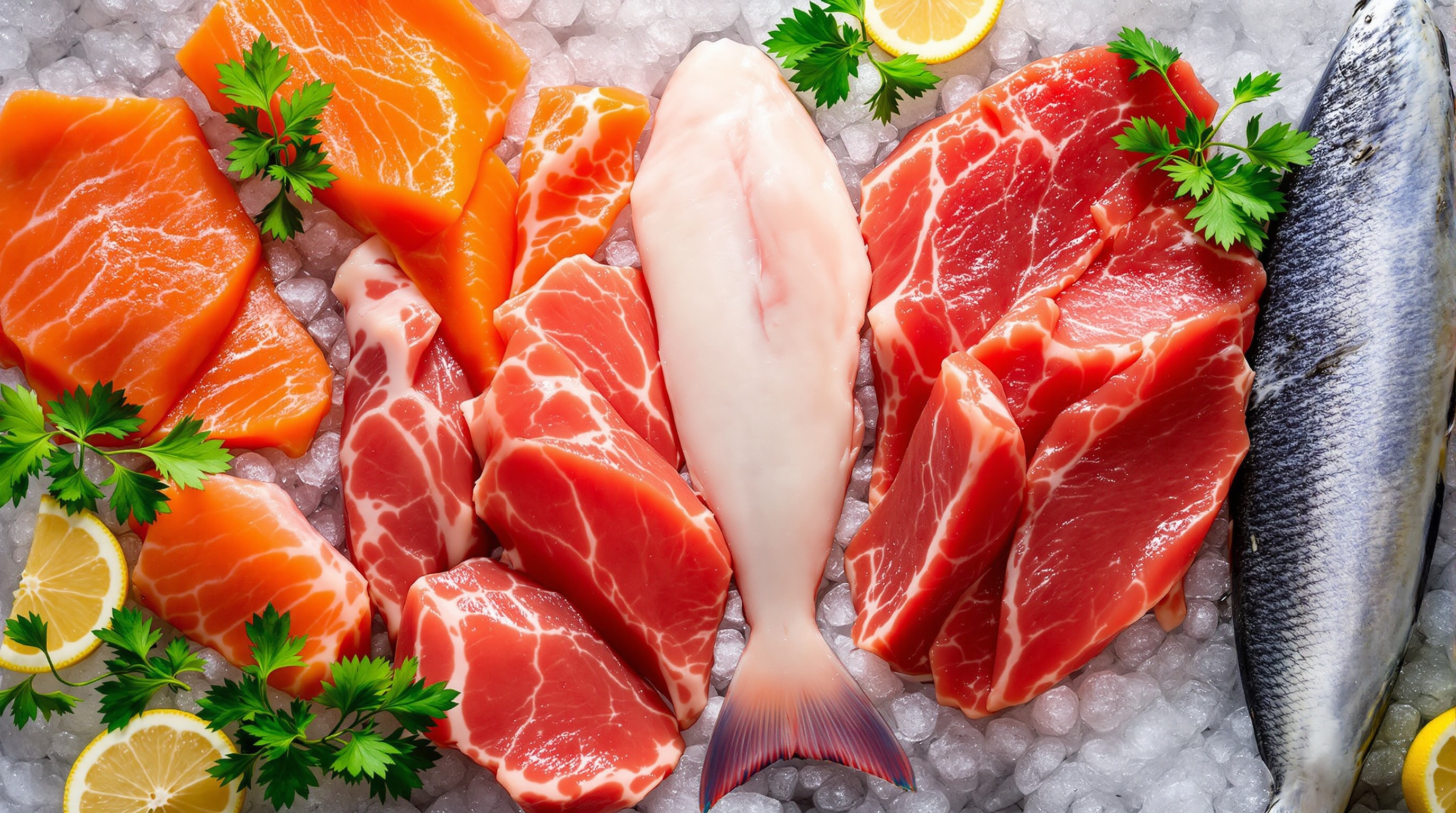
The North Atlantic Lineup
- Atlantic Salmon — farm-raised, since wild-caught Atlantic salmon is not available; rich, full-flavored, made for the grill or broiler. Seventeen of our favorite preparations live on the salmon recipes page.
- Yellowfin Tuna Steaks — meaty and clean-tasting; sear hard and fast, leaving the center rare like good beef.
- Swordfish — the steak of the sea, firm enough for kebabs and grill grates; it loves citrus and olive oil.
- Haddock — sweet, delicate flake; New England's fish-and-chips and chowder workhorse.
- Sole — thin, elegant fillets for gentle pan-frying or rolling; ready in minutes.
- Scrod — the old Boston market name for young cod or haddock; mild, inexpensive, endlessly useful baked with buttered crumbs.
- Salt Cod — the original preserved seafood, firm and savory after soaking; the backbone of baccala dishes and proper codfish cakes.
- Smoked Atlantic Salmon — silky, cool-smoked slices that want only dark bread, capers and lemon.
Judging Freshness Like a Buyer
Fresh fish is graded coming off the boat, hand cut, and graded again before it ships — and you can run the same checks at home. Truly fresh fillets glisten and look translucent at the edges, smell of clean seawater rather than "fish," and spring back when pressed. Whole fish should have clear, domed eyes and bright red gills. The FDA's guide to selecting seafood is an excellent reference for these markers and for safe storage temperatures.
Species Labels and Fish Advice
NOAA's Atlantic salmon profile states that wild-caught Atlantic salmon is not available and farm-raised Atlantic salmon is available year-round. Commercial and recreational fishing for Atlantic salmon in the United States is prohibited; the remaining wild U.S. populations in Maine are endangered. Read the species and production method together when interpreting a label.
For people who are pregnant or breastfeeding and for children, FDA/EPA fish advice places salmon, haddock, sole, lobster, clams, crab, scallops and shrimp among its Best Choices, based on mercury levels. Swordfish is a Choice to Avoid for those groups. These categories concern mercury, a separate question from how fresh a fillet looks.
Matching Fish to Method
Firm steaks (tuna, swordfish) belong over fire. Medium-firm fillets (salmon, haddock) take to baking, broiling and poaching. Delicate fillets (sole, scrod) want a gentle pan and a light hand. When in doubt, the ten-minute rule rarely fails: measure the fish at its thickest point and cook about ten minutes per inch, by any method, until just opaque.
A Word for Salt Cod
The oldest item in the lineup deserves its own paragraph. Salt cod built New England — it was the region's first export economy and the reason a carved wooden "Sacred Cod" still hangs in the Massachusetts State House. The fish keeps for months, and the cure transforms it: after a twenty-four-hour soak with two or three changes of water, the flesh turns silky, savory and faintly sweet, ready for baccala salads, brandade, and the codfish cakes that anchored generations of New England Friday suppers. Treat the soak as part of the recipe rather than a chore, and salt cod will out-cook fresh cod in any dish that simmers.
Storing Fillets at Home
Fresh fillets are happiest at 32 degrees — colder than most home refrigerators run — so the fish-counter trick travels well: set the wrapped fillets in a dish over a bed of ice in the coldest corner of the refrigerator, pour off the melt daily, and cook within a day or two. For longer keeping, wrap tightly against air and freeze; lean white fish (haddock, sole, scrod) holds six months frozen, while richer fish like salmon and tuna are best inside three. Thaw overnight in the refrigerator, pat dry, and treat the fillet to the hottest, shortest cooking it will tolerate.
Keep Exploring
The shellfish side of the market lives on its own pages — scallops, shrimp and clams — and the Seafood Facts & Info library goes deeper on the species themselves. For tonight's dinner, the recipe collection sorts everything by fish.