Alaskan King Crab Legs
From the deep, cold waters of the Bering Sea, Alaskan red king crab legs are sweet and tender, with a mild flavor that is delicious on its own or accompanied by butter and sauces. King crab legs arrive fully cooked — the work happens at sea — so the kitchen job is simply to warm them through without losing a drop of their character.
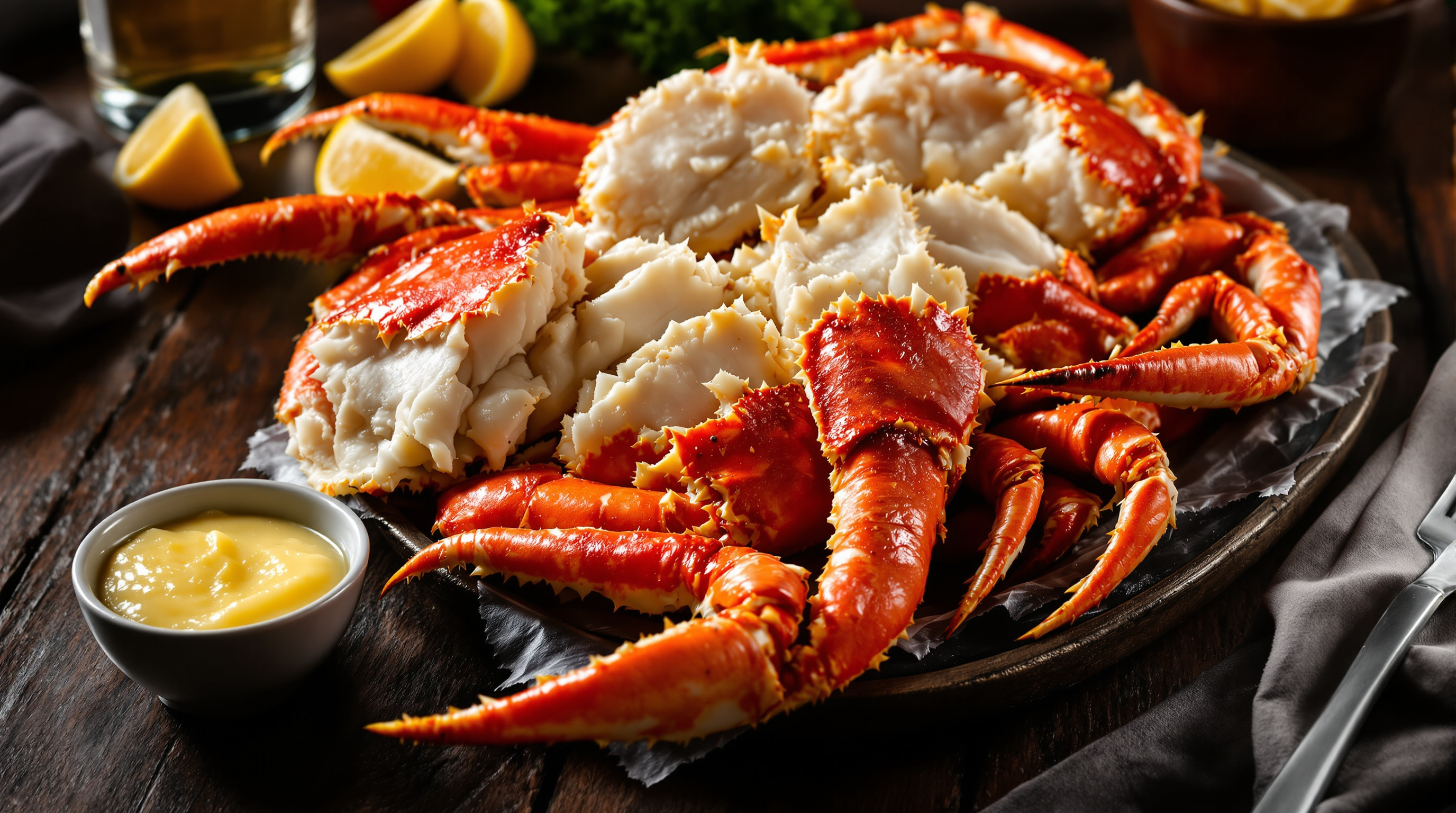
Red King Crab: The Gold Standard
Three king crab species are harvested in Alaska, and red king crab is the one the others are measured against: the largest, the sweetest, and the source of those dramatic, spiky scarlet legs. The fishery is one of the most carefully managed in the world — short seasons, strict quotas and rigorous monitoring, documented in detail by NOAA Fisheries. Legs are cooked and brine-frozen on the boats or dockside within hours of the catch, which is why "frozen" king crab is, in truth, the freshest you can get anywhere outside Dutch Harbor.
Seasons Behind the Legs
Bristol Bay's 2026/27 red king crab season is scheduled for October 15, 2026 through January 15, 2027, with a 3,410,000-pound quota, in Alaska's announcement. Only males meeting size rules may be harvested; this fishery was closed in 2021/22 and 2022/23. Snow crab's announced quota is 5,100,000 pounds, also opening October 15. NOAA describes snow crab as overfished but rebuilding, with a 2029 target.
How those quotas are set each autumn, and why some seasons never open at all, is explained in our guide to Bering Sea crab seasons.
Sizing: Counts per 10 Pounds
King crab legs are graded by how many legs make up ten pounds. Fewer legs per ten pounds means bigger legs: a "6/9" grade runs colossal, while "16/20" legs are slimmer but identical in flavor. A pound to a pound and a half per person is the honest planning number for a crab-forward dinner, shells included.
Reheating Without Drying
Steam (best): 5 to 7 minutes over rolling steam, straight from thawed. The shell protects the meat and the brine stays put.
Oven: wrap legs in foil with a splash of water or butter, 8 to 10 minutes at 350°F.
Grill: 4 to 5 minutes, turning once — a little char on the shell perfumes the meat beautifully.
Avoid boiling; it washes flavor out into the pot. Split the shells with kitchen shears along the pale underside, and the meat lifts out in whole, unbroken pieces.
King, Snow and Dungeness: Knowing the Difference
The crab counter sells three very different experiences. King crab is the largest and richest, with thick, meaty legs that carve like little roasts. Snow crab runs smaller and sweeter-delicate, its clusters made for cracking by hand at a casual boil. Dungeness, the Pacific coast pride, is a whole-crab affair with fine, flaky meat. None is wrong; but when the occasion calls for drama on a platter and meat that needs no picking patience, king crab is the one the table remembers. A worthwhile note on labels: "colossal" and "super colossal" are marketing language layered over the count grades — the count is the fact, the adjective is the mood.
Thawing and Keeping
King crab legs arrive frozen and want a slow, dignified thaw: overnight in the refrigerator on a tray to catch the drip, never under hot water and never on the counter. Thawed legs keep two days refrigerated; the meat is already cooked, so everything after the thaw is a matter of gentleness. Leftover picked king crab — should such a thing occur — is extraordinary the next day folded into scrambled eggs, a crab salad with lemon and tarragon, or the bisque pot. Freeze leftover meat only as a last resort; the second freeze costs more texture than the first.
At the Table
Drawn butter and lemon are traditional and complete. The mild sweetness also takes warmly to garlic butter, Old Bay-style seasoning, or a sharp mustard sauce. King crab is a natural partner to a clambake spread, and pairs surprisingly well with live lobster in a north-meets-northeast feast — a combination this house always had a soft spot for. Leftover picked crab is royalty in bisques and crab cakes; see Seafood Recipes for both.