Chowders & Bisques
Try an award-winning New England clam chowder or a proper lobster bisque, made with fresh, natural ingredients and no preservatives — the standard this kitchen set for itself from the beginning. A great chowder is New England's first comfort food, and the difference between good and unforgettable is almost entirely in the freshness of what goes into the pot.
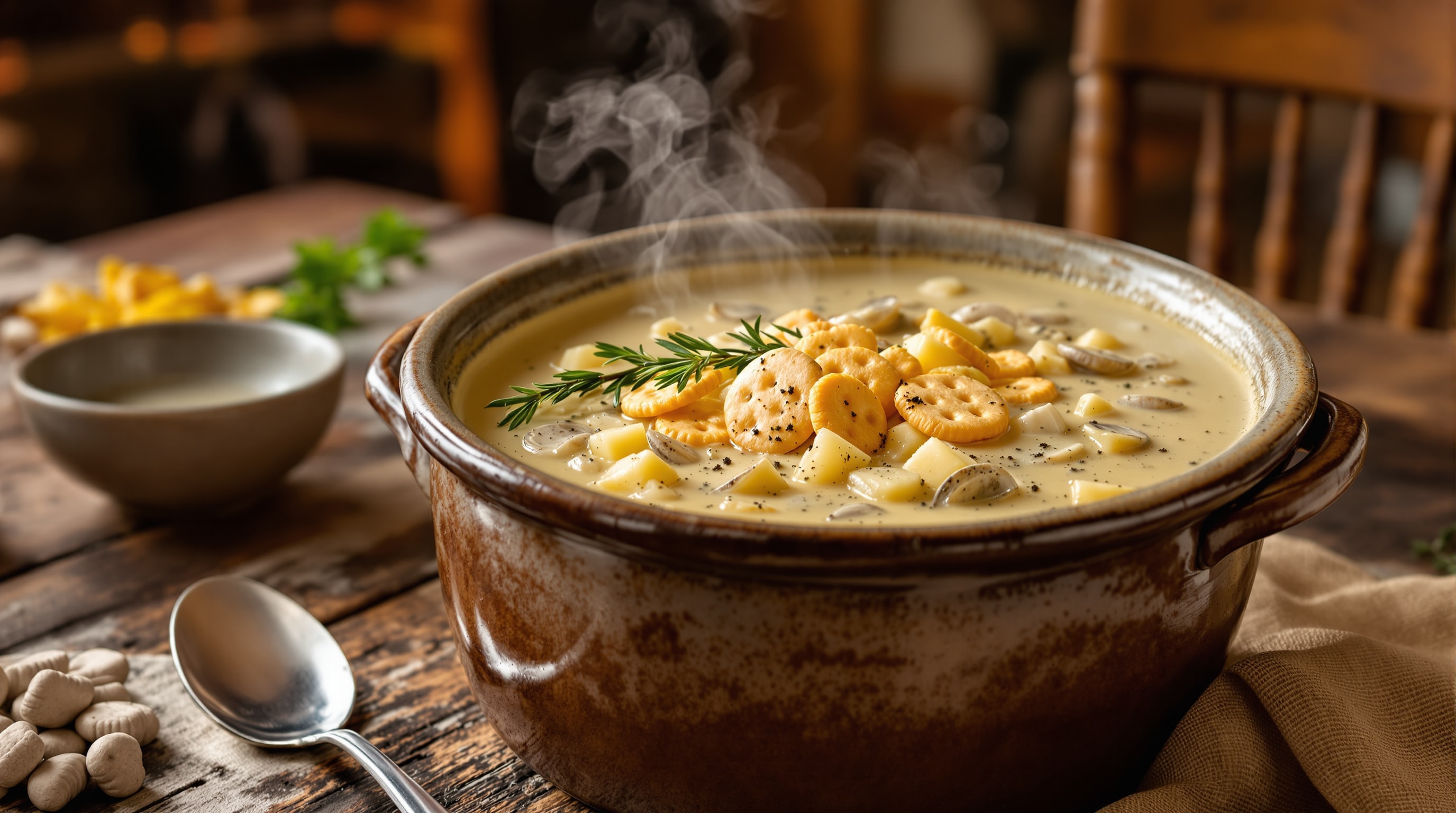
The New England Canon
- New England Clam Chowder — cream, potatoes, salt pork and chopped quahogs. Thick enough to matter, never so thick a spoon stands up in it. The chowder clams themselves are explained on our clams page.
- Lobster Bisque — silky, sherry-scented, built on a stock of roasted lobster shells and finished with cream and picked lobster meat.
- Maine Lobster Stew — humbler and arguably more beloved: butter-poached lobster meat in rich, savory milk and cream, traditionally better on the second day.
- Manhattan Clam Chowder — the tomato-based heresy New Englanders grumble about and quietly enjoy; brighter and lighter than its northern cousin.
- Corn Chowder — the land-side member of the family, sweet with summer corn and welcome at any clambake table.
- Shrimp & Corn Bisque — a Gulf-meets-Cape hybrid that earned its place in the lineup, sweet shrimp and corn in a velvety base.
Chowder vs. Bisque, Settled
A chowder is chunky and honest — potatoes, aromatics and seafood in a milk or cream base, textures intact. A bisque is smooth and aristocratic — shellfish stock pureed to velvet, enriched with cream, garnished sparingly. Both reward patience at the start: sweating the aromatics slowly, building the base before the seafood ever touches heat, and adding the seafood last so it stays tender.
The One Rule
Never boil a finished chowder or bisque. Dairy breaks and seafood toughens at a hard boil; the pot should only ever shiver. Reheat gently, season at the end — clams and lobster carry their own salt — and let a day in the refrigerator deepen the flavor if you can stand the wait.
A Short History in a Bowl
Chowder came ashore with European fishermen — the name likely from the French chaudière, the cauldron a crew's catch went into — and New England made it its own with salt pork, ship's biscuit and the quahogs underfoot at every low tide. By the nineteenth century chowder was on every tavern menu from New Bedford to Portland, and the cream-versus-tomato schism had hardened into regional identity; Maine legislators once famously entertained a bill to outlaw tomatoes in chowder altogether. The bowl on your table is the oldest continuously served dish in New England cooking — worth remembering as you crumble the crackers in.
Building a Base That Holds
Every chowder in the canon starts the same way: salt pork or bacon rendered slow, onions sweated soft in the fat, potatoes simmered in clam broth until just tender — and only then the dairy, tempered in off the heat, and the clams last of all, barely warmed through. Bisque inverts the order of labor: the shells come first, roasted and simmered into stock, and the cream joins a base already deep with flavor. Both reward the cook who makes a day-ahead batch; both punish the one who rushes the pork or boils the milk. Keep oyster crackers and a pat of butter for the top, and ladle from the bottom of the pot, where the clams settle.
Make Your Own
Full preparations — including basic clam chowder, Manhattan chowder, corn chowder, oyster stew and lobster stew — are collected in our Seafood Recipes library. Pair any of them with crusty bread and you have the opening course of a clambake, or the whole of a very good winter supper.