Lobster Tails
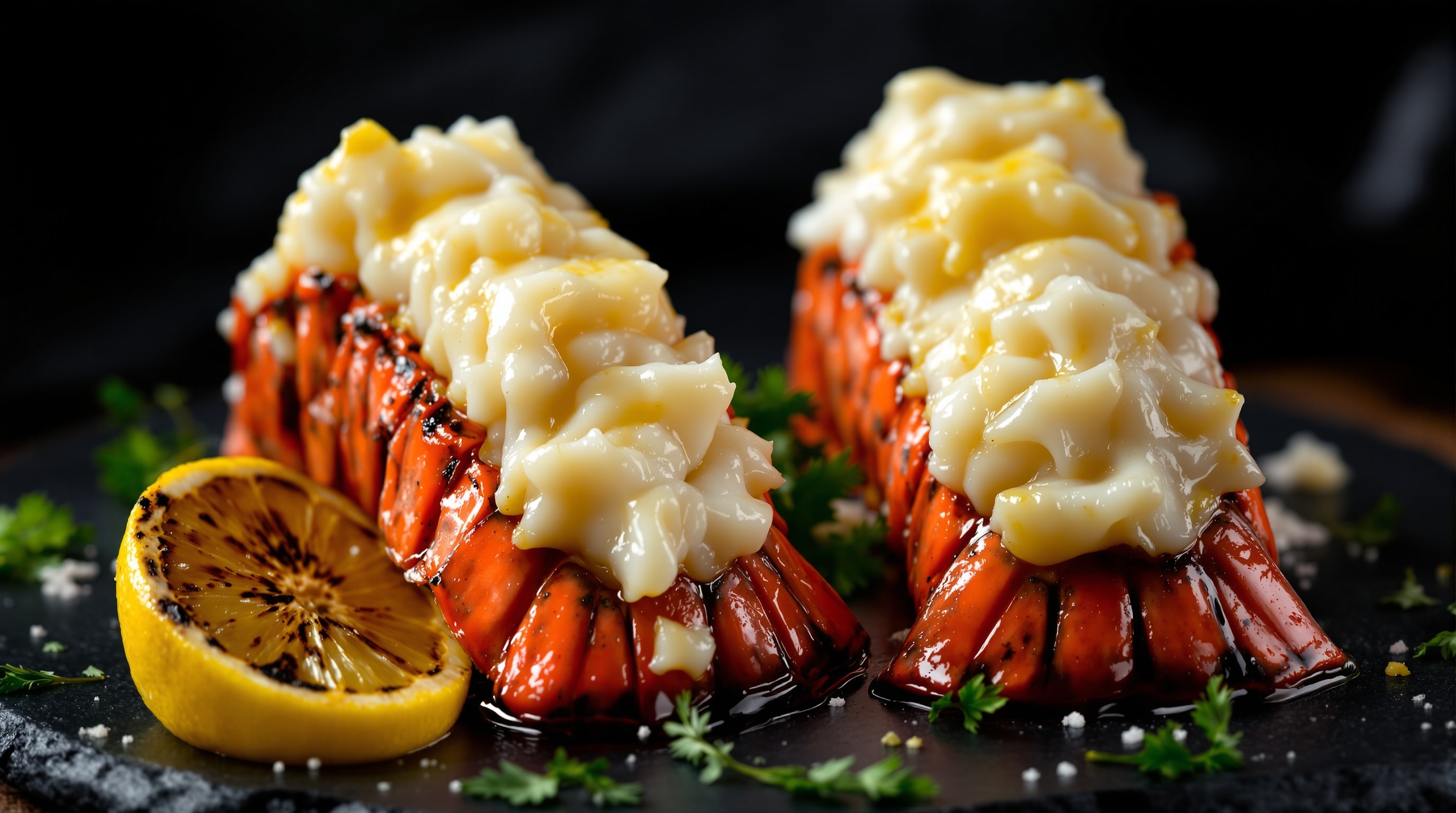
Delicious Maine lobster meat in the shell. The 4-ounce tails come from the youngest lobsters and are the most tender and juicy of all; the jumbos make a steakhouse centerpiece. Tails have always been shipped raw rather than cooked, so you can savor the full lobster flavor and aroma in your own favorite preparation.
Tail Sizes at a Glance
- Small (4 oz) — sweetest and most tender; two per person makes an elegant plate.
- Tender (5–6 oz) — the everyday luxury size, perfect for surf-and-turf.
- Medium (6–7 oz) — a solid single-serving tail with real presence.
- Large (8–10 oz) — the dinner-party standard; one per guest, no sides required to impress.
- Jumbo (12–14 oz) — carve-at-the-table territory, best butterflied and basted.
Why Raw Beats Pre-Cooked
A tail frozen raw in the shell keeps its moisture and its delicate, briny sweetness; pre-cooked tails almost always arrive overcooked once you reheat them. Thaw tails slowly in the refrigerator overnight — never in warm water — and cook them the same day they thaw for the best texture.
Three Reliable Methods
Broiled: Butterfly the tail by cutting the top shell lengthwise, lift the meat to rest on the shell, brush with melted butter and broil 1 minute per ounce, until the meat is opaque and 135–140°F inside.
Grilled: Split the tail in half lengthwise, brush with butter, and grill flesh-side down 4–5 minutes, then shell-side down until just cooked through. The shell chars; the meat perfumes.
Steamed: Gentlest of all — 8 to 10 minutes for a medium tail over rolling steam, then finish with lemon and drawn butter.
However you cook them, pull the tails the moment the meat turns from translucent to pearly. Carryover heat does the rest; the difference between sublime and rubbery is about ninety seconds.
Butterflying, Step by Step
The presentation cut is easier than it looks. With kitchen shears, cut the top shell straight down the middle, stopping at the tail fan. Slip a thumb between meat and shell to loosen, lift the whole muscle up through the cut, and let it rest on top of the closed shell — still attached at the fan, so it cooks anchored. Brush with butter, season, and the tail bastes itself as it cooks, shell underneath working as a built-in roasting rack. A 1/2-inch skewer run lengthwise through the meat before cooking keeps the tail from curling on the grill.
Buying and Storage Notes
Cold-water tails from Maine and Atlantic Canada are denser and sweeter than warm-water tails from the tropics; the label rarely says, but the price usually does. Look for tails with clean, tightly attached shells and no ammonia smell, and avoid any with gray or yellowed meat showing through the membrane. Frozen tails keep beautifully for six months or more at a steady zero degrees; once thawed, cook within a day and never refreeze raw. The frozen-in-shell format is precisely why tails became the most forgiving way to keep lobster on hand for an occasion that hasn't been scheduled yet. One last buying note: "warm-water" and "cold-water" is the only label distinction that changes the eating — if a bargain tail doesn't say cold-water, it isn't, and the texture will tell you so.
Pairings and Next Steps
Lobster tails love simple company: drawn butter, lemon, tarragon, chives, a little smoked paprika. For chunked-lobster dishes — rolls, stews, mac and cheese — picked lobster meat is the smarter starting point. For whole-animal ceremony, see live Maine lobster, and for the meal that involves a beach and a bonfire, the New England clambake page awaits. More preparations live in our Seafood Recipes collection.